
Order Up! Can You Decode Classic American Diner Lingo?
If you’ve ever watched a classic American movie set in a bustling diner—servers shouting orders, short-order cooks flipping pancakes, and customers hunched over steaming mugs of coffee—you’ve likely been exposed to the fast-paced, almost musical language of diner lingo. But how much of it do you really understand? Order Up! Can You Decode Classic American Diner Lingo? is a brand new trivia game with questions designed to test your knowledge of this quirky, colorful vernacular. Before you play, let’s dig into the fascinating world of diner lingo: how it started, why it matters, and what it tells us about American culture.
Introduction to American Diner Culture
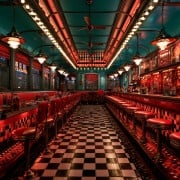
Few places are as emblematic of Americana as the classic diner. With their neon signs, chrome stools, and round-the-clock menus, diners are more than just eateries—they’re social hubs, melting pots, and monuments to comfort food. From bustling city corners to sleepy roadside stops, diners have welcomed everyone from truckers to teenagers since the early 20th century.
But beyond the food and the atmosphere, diners have always had their own way of doing things—including how they talk. Enter diner lingo—the secret code that servers and cooks use to keep the orders (and the fun) flowing.
The Origins of Diner Lingo
Diner lingo traces its roots to the early 1900s, when the first diners appeared as horse-drawn lunch wagons in cities like Providence and New York. As these wagons evolved into stationary restaurants, the need for speedy, efficient communication between the counter staff and the kitchen became essential.
Inspired by the slang of vaudeville performers, the rapid-fire patter of auctioneers, and the inside jokes of soda jerks, diner lingo developed as a way to make the mundane task of calling out orders more lively—and, perhaps, to keep the customers guessing.
Why Diner Lingo Developed
At its core, diner lingo was all about speed and clarity. Imagine a noisy, crowded diner during the breakfast rush. Instead of saying, “I need two eggs, sunny-side up, with bacon and wheat toast,” a server could call, “Adam and Eve on a raft, wreck ’em, with squeal and a slice of brown!” The cook would know exactly what to prepare, and the order would be memorable enough to stick.
But efficiency wasn’t the only reason. Diner lingo was also a badge of honor—a way for staff to show they were insiders. New hires learned the code as part of their initiation. And as the lingo spread, it became a performance for the customers, who’d sometimes order “mystery in the alley” (a side of hash) just for the fun of saying it.
The Role of Lingo in Diner Efficiency
Why go to all the trouble of inventing a new language? For diners, the answer was clear: efficiency. Short, punchy phrases cut down on confusion and repetition, especially in noisy environments. They also helped servers move quickly—no need to repeat long orders when a few code words would do.
Lingo also allowed cooks to prioritize and batch orders. Hearing “two wrecked with squeal, one cowboy riding solo” (two scrambled eggs with bacon, one plain Western omelet) meant the cook could get to work immediately, without asking for clarification.
Diner Lingo in Popular Culture
Diner lingo didn’t just stay behind the counter. Hollywood and TV quickly embraced its charm. In movies like Diner (1982) and shows like Alice and Twin Peaks, diner scenes often feature staff rattling off orders in their own special code, adding authenticity and humor.
Even outside of diners, phrases like “Adam and Eve on a raft” have made their way into pop culture references, crossword puzzles, and late-night comedy sketches. The lingo symbolizes a no-nonsense, blue-collar work ethic and a certain American optimism.
How Diner Lingo Reflects American Society
Diner lingo is more than just a quirky way to order food—it’s a snapshot of American values. The language is informal, inventive, and often playful, reflecting a culture that values speed, humor, and egalitarianism. Unlike the formal codes of fine dining, diner lingo is accessible to all, welcoming anyone who wants to learn.
It also reflects America’s diversity. Many terms draw from regional slang, immigrant languages, or the latest pop culture trends, making the lingo a living record of the times.
The Evolution and Decline of Diner Lingo
By the late 20th century, as chain restaurants and computerized order systems took over, diner lingo began to fade. Standardized menus and training manuals left little room for improvisation. Health codes and corporate policies further discouraged the use of “insider” language.
Yet, the nostalgia for classic diners—and their lingo—remains strong. Books, documentaries, and websites have catalogued hundreds of terms, preserving them for future generations.
Modern-Day Remnants and Revivals
While you might not hear “one in the mud” (chocolate doughnut) at your local chain diner, some classic spots still keep the tradition alive. Retro-themed diners, food festivals, and TV chefs often revive the lingo as a nod to the past. Social media has also sparked new interest, with memes and trivia games (like Order Up!) celebrating the unique language of diners.
In fact, learning diner lingo has become a fun way to connect with American history—a playful “secret code” for food lovers and trivia buffs alike.
Conclusion: The Lasting Legacy of Diner Lingo
Diner lingo may have started as a practical tool for busy cooks and servers, but it’s become much more—a symbol of American ingenuity, humor, and togetherness. Whether you’re a trivia enthusiast, a foodie, or just someone who loves a good story, exploring this secret language offers a window into the heart of diner culture.
So, are you ready to test your knowledge? Order Up! Can You Decode Classic American Diner Lingo? is packed with questions that will challenge your wits, tickle your funny bone, and maybe even inspire you to try out a few phrases next time you order breakfast.

Comments (0)
We want to hear your feedback! Share your scores and discuss the quiz, but keep it civil.