
Handmade to Mass-Produced: Can You Spot the Industrial Revolution’s Impact?
Introduction: The Dawn of a New Era
Imagine a world where nearly everything you own was made by hand—your clothes, your dishes, your tools. Then, in just a few decades, the world changes forever. Machines begin to hum. Smoke stacks punctuate the horizon. Cities swell with people chasing new opportunities. This seismic shift is the Industrial Revolution, and it’s the focus of our brand-new trivia game: Handmade to Mass-Produced: Can You Spot the Industrial Revolution’s Impact? With its fascinating questions, you’ll journey through history and discover how this era still shapes the way we live today.
Life Before the Industrial Revolution
Before spinning jennies and steam engines, society moved at a gentler pace. Most people lived in rural villages, working on small farms or as skilled artisans. Clothing was tailored at home or by local weavers; shoes were cobbled by hand. Transportation meant walking, riding horses, or, if you were lucky, a bumpy ride in a carriage.
Did you know? In the 1700s, it could take months for news or goods to travel between distant towns. Imagine waiting that long for your next new outfit or the latest gossip!
The Mechanization of Production
The Industrial Revolution ushered in an age of invention. Machines like James Hargreaves’ spinning jenny and Richard Arkwright’s water frame transformed textile production. Suddenly, one person could produce as much thread as several workers combined. The steam engine, perfected by James Watt, powered factories, trains, and ships, setting the gears of progress into unstoppable motion.
Transforming Work and the Workforce
With machines taking over much of the manual labor, the nature of work changed dramatically. Instead of home workshops, people flocked to sprawling factories. The concept of a “workday” and standardized shifts was born. For many, this meant leaving the family farm behind and adapting to the relentless rhythms (and hazards) of factory life.
Child labor, unsafe conditions, and long hours were rampant in the early days. But the era also sparked the rise of labor unions and movements demanding safer, fairer workplaces—a legacy we still benefit from today.
Urbanization and Social Change
As factories sprouted, so did cities. By the mid-1800s, cities like Manchester and Birmingham had doubled—or even tripled—in size. This urban boom brought opportunity and excitement, but also overcrowded slums, pollution, and new social challenges. Public health crises, like cholera outbreaks, forced cities to rethink sanitation and infrastructure.
These shifts redefined society. A growing middle class emerged, and people began to demand better housing, education, and civic amenities. The Industrial Revolution wasn’t just about machines—it was about remaking the fabric of daily life.
Everyday Life: From Homespun to Factory-Made
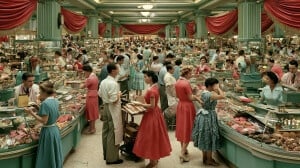
The impact of mass production was felt in every home. Goods that were once luxuries—cotton shirts, porcelain dishes, even books—became affordable and accessible to ordinary families. Shopping transformed from a rare treat to a regular part of life, thanks to new department stores and catalogs.
Can you spot the lasting influences? Look around your own home—how many items would even exist without these industrial breakthroughs?
The Environmental Footprint
Progress had a price. Factories belched smoke and soot, rivers turned murky with dye and chemicals, and forests fell to feed the insatiable appetite for coal and timber. Early industrial cities were often dark with smog, and workers faced health hazards from dangerous machinery and polluted air.
The Industrial Revolution was the first time humanity’s impact on the environment became impossible to ignore. It set the stage for future conversations about sustainability, conservation, and our responsibility to the planet.
Global Ripple Effects
While the Industrial Revolution began in Britain, its effects quickly spread worldwide. Railways, telegraphs, and steamships connected continents, creating a global economy. Nations raced to industrialize, and the demand for raw materials spurred colonization and trade on an unprecedented scale.
Cultures blended, economies boomed, and sometimes, conflicts erupted. The world shrunk—and grew more complex.
Legacy: How the Industrial Revolution Shapes Our World
Today, echoes of the Industrial Revolution are everywhere: in the cars we drive, the cities we inhabit, and the gadgets we use. Modern factories, computers, and robots are direct descendants of the first spinning machines and steam engines. Even our debates about work-life balance, urban life, and environmental stewardship trace back to this era.
The Industrial Revolution taught us that progress can bring both extraordinary benefits and daunting challenges. It’s a lesson worth remembering as we navigate the technological revolutions of our own time.
Conclusion: Reflecting on Progress and Its Price
The story of the Industrial Revolution is one of ingenuity, adversity, and transformation. It’s a story that still unfolds in the choices we make every day. Our new trivia game, Handmade to Mass-Produced: Can You Spot the Industrial Revolution’s Impact?, invites you to explore this pivotal era—one question at a time. Whether you’re a history buff, a curious learner, or just looking for a fun challenge, you’ll find plenty to surprise and inspire you.
So, are you ready to test your knowledge and see if you can spot the Industrial Revolution’s impact? Gather your friends, spark some lively debates, and let the journey begin!
Stay tuned for more trivia, educational fun, and fascinating glimpses into the past—because history is everywhere, and it’s never been more exciting to explore!



Comments (0)
We want to hear your feedback! Share your scores and discuss the quiz, but keep it civil.